
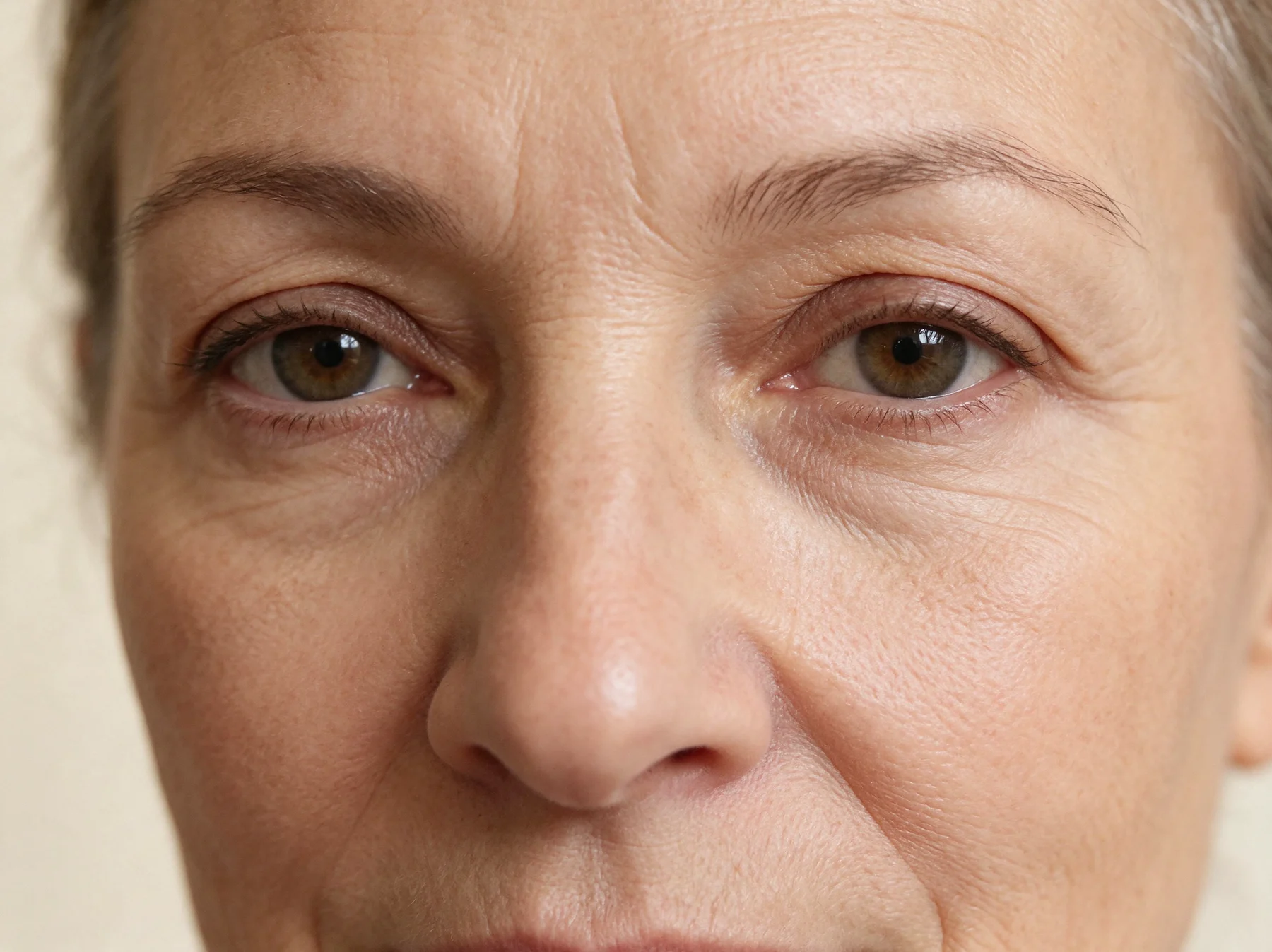
Overview
Upper blepharoplasty removes a measured amount of excess skin, and sometimes a small amount of muscle or fat, from the upper eyelid. The incision is designed to sit within the natural eyelid crease.
Who it may suit
- People with hooding that makes the eyes look tired
- Those whose excess skin touches the lashes or affects the upper visual field
- Adults in good general health with realistic expectations
Options
- Skin-only excision
- Skin and muscle excision
- Conservative fat repositioning or removal
- Combination with brow assessment where the brow position contributes
Consultation
Your eyelids, brow position, eye health and dryness are assessed. Brow descent is often mistaken for eyelid excess, so both are examined together.
Preparation
- Disclose eye conditions, dry eye and contact lens use
- Review medicines that affect bleeding, as advised by your clinician
- Arrange support for the first days after surgery
Recovery
Swelling and bruising are common and usually settle over one to three weeks. Stitches are often removed around one week. Your surgeon will give procedure-specific advice.
Risks and complications
All surgery carries risk. Possible complications include:
- Bleeding or haematoma
- Infection
- Visible or raised scarring
- Asymmetry
- Changes in sensation
- Need for further surgery
- Anaesthetic risks
- Dry eye or irritation
- Difficulty closing the eye fully (usually temporary)
- Rarely, vision-related complications
Your individual risks will be discussed in detail, and you will be asked to give written informed consent.
Alternatives
- Observation
- Brow lift where the brow is the main cause
- Non-surgical skin treatments for very mild change
Guide price
| Upper blepharoplasty | £2,500 |
| Upper and lower blepharoplasty | £4,350 |
| Asian blepharoplasty | £2,595 |
| Ptosis repair | £2,795 |
Guide prices only. Your final price is confirmed in writing after consultation and depends on your individual plan.
Questions
Will the scar be visible?
The incision is usually placed in the natural crease so that it is concealed when the eyes are open, though individual healing varies.
Can it be done under local anaesthetic?
Often, yes. The most suitable anaesthetic will be discussed at consultation.